Streaming, Merch, and Concert Tickets: Where Does Your K-pop Money Actually End Up?
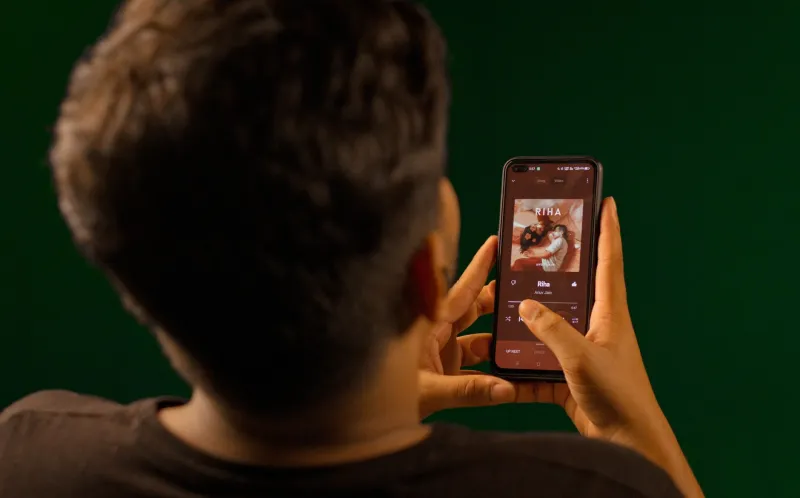
Let's be real for a second. If you're deep in a K-pop fandom, you've probably spent more money than you'd like to admit. Maybe it's the Spotify streams you rack up obsessively during comeback season, or the photocard set you paid $60 for on Weverse Shop, or the concert ticket you bought the second the presale dropped. The intention behind all of it is pure: you want to support your favorites. You want them to know their fans show up.
But here's the uncomfortable question nobody in your group chat is really asking: how much of what you're spending is actually reaching your idols?
Spoiler — it's a lot less than you think.
The Streaming Math Nobody Wants to Do
Spotify pays somewhere between $0.003 and $0.005 per stream. On a good day. That number gets thrown around a lot in fandom spaces, but what fans rarely stop to think about is that the money doesn't go directly from Spotify to the artist. It goes to whoever holds the master recording rights — which, in the K-pop world, is almost always the label.
For most major K-pop acts, that means companies like HYBE, SM Entertainment, JYP, or YG are the first stop for streaming revenue. From there, the label takes its cut based on whatever contract the group signed — and those contracts, especially for newer or smaller acts, can be notoriously label-heavy. Industry insiders have described standard K-pop rookie contracts as splitting revenue anywhere from 50/50 to as lopsided as 90/10 in the label's favor during early career stages.
So when your fandom organizes a mass streaming campaign and hits 10 million plays in 24 hours? That's roughly $30,000 to $50,000 generated — most of which flows to the label before a single dollar is divided among group members.
For a group of five, after label deductions, management fees, and production cost recoupment? Each member might see a few hundred dollars from that viral moment. Maybe.
Album Sales: The Photocard Problem
Physical album sales are where K-pop fan spending gets particularly wild — and particularly complicated. In the US, fans regularly buy multiple copies of the same album not for the music (which they've already streamed a thousand times) but for the photocards randomly inserted inside.
Here's what that actually funds: manufacturing, packaging, distribution, and retail markup all come out before the label sees revenue. Then the label's cut comes out before the artists see anything. And unlike Western pop acts who often own or co-own their masters and publishing, most K-pop idols — particularly those who didn't write the music — are earning royalties on a very thin slice of the final pie.
One music industry consultant who works with both Korean and American labels described it this way: "The physical album model in K-pop is brilliant for labels and brutal for artists in the early stages. Fans are essentially funding a system designed to make the company money first, with artist compensation being almost an afterthought until an act reaches a certain tier of success."
That's a hard thing to sit with when you're staring at a box of ten identical albums on your shelf.
Concert Revenue: Closer, But Still Not Clean
Okay, so concerts must be where fans' money hits different, right? Artists get paid directly from ticket sales, touring is where the real money is — that's the conventional wisdom.
And it's partially true. Touring revenue is generally more favorable to artists than streaming or album sales, but the K-pop touring model has its own layers. Arena and stadium shows involve venue fees, production costs, touring staff, travel, and promoter splits. For US-based K-pop tours specifically, international logistics add another layer of expense.
Then there's the ticketing ecosystem. With Ticketmaster's service fees routinely adding $30–$50 per ticket on top of face value, a significant chunk of what fans pay never touches the artist's revenue stream at all. And if you bought resale? That money went to a scalper, full stop.
VIP packages and fan meet add-ons are where artists and labels tend to see better margins — but those are also the products most likely to feel financially out of reach for everyday fans, particularly younger ones.
Merch: The Complicated Middle Ground
Official merchandise sold through platforms like Weverse Shop or at concert venues does funnel back to the label and, to some extent, the artists — especially when groups have creative input or co-branding deals. But third-party merch sold on Amazon, Etsy, or random fan sites? That money goes nowhere near your bias. It funds someone else's hustle entirely.
Fans who want their spending to actually count are generally better off buying directly from official channels, even when the shipping costs sting. A $35 official lightstick does more for your favorite group than ten bootleg hoodies combined.
So What Can Fans Actually Do?
None of this is meant to make you feel like your support is meaningless — because it genuinely isn't. Streaming numbers, album sales charts, and concert attendance all feed into the cultural visibility that shapes an artist's career trajectory. Labels pay attention to those metrics. So does the industry.
But being a smart fan means understanding the system you're operating inside. A few things that actually move the needle:
- Stream on platforms that pay higher royalties. Apple Music and Tidal have historically paid more per stream than Spotify. Your listening habits matter.
- Buy direct when you can. Weverse, the official artist app, or label-run stores put more money in the right hands than third-party retailers.
- Attend live events. Even with the ticketing chaos, live show attendance is one of the clearest signals of US market strength for K-pop acts trying to grow their footprint here.
- Engage, not just spend. Social media engagement — genuine posts, shares, fan content — builds the kind of organic buzz that money literally cannot buy. Labels notice. American media notices.
The Bigger Conversation
The K-pop industry is evolving. More established acts are renegotiating contracts. Some are launching independent labels or co-ownership deals. Artists like those under HYBE's newer structures are seeing more transparent revenue sharing than the generation before them did.
But for a huge portion of active groups right now — especially mid-tier and emerging acts — the financial pipeline between fan wallet and artist bank account is longer, leakier, and more label-controlled than most fans scrolling through their Weverse feeds would ever guess.
Your support matters. Your money matters. Spending it with intention — knowing where it goes and why — might just be the most genuinely fan-powered thing you can do.