Spotify Thinks I Like Pop Punk Now: Why K-pop Fans Are Done Trusting the Algorithm
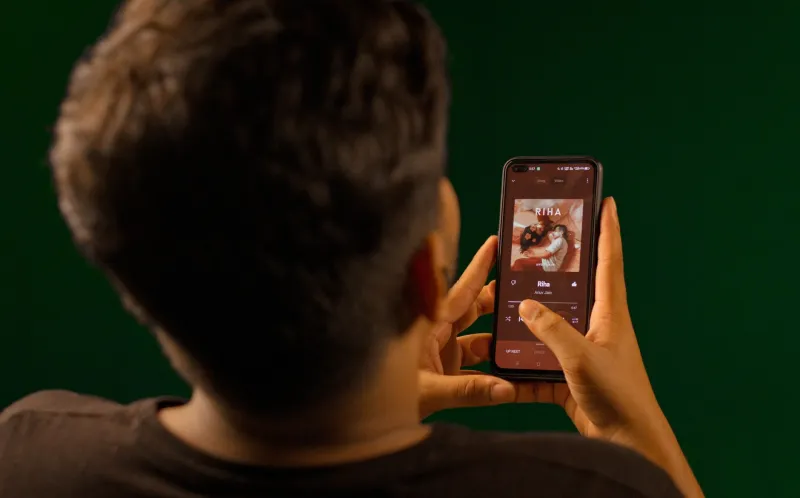
You spend three weeks deep in a SEVENTEEN discography rabbit hole. You stream every unit, every solo, every Japanese release. You add songs to playlists, you replay B-sides at 2 AM, you let entire albums autoplay while you work. And then Spotify's Discover Weekly drops on Monday morning and it's just... Paramore? Some lo-fi chill beats? A random Latin pop track you've never heard of?
If you're a K-pop fan in the US, this is basically a rite of passage. The algorithm has no idea what to do with you, and at some point, you stop pretending it ever will.
Why Mainstream Algorithms Keep Getting K-pop Wrong
Here's the thing — Spotify and YouTube's recommendation systems were built around a very specific model of how music consumption works. Genre tags, listener behavior clusters, audio fingerprinting. It's a system that works reasonably well if you're bouncing between Taylor Swift and Olivia Rodrigo. But K-pop breaks almost every assumption that model is built on.
For starters, K-pop doesn't fit cleanly into a single genre box. A group like aespa can drop a hyperpop banger, a cinematic ballad, and a Y2K-inspired dance track all in the same mini-album. The algorithm sees that and essentially short-circuits. It doesn't know whether to file you under "EDM" or "pop" or "R&B" or just give up entirely and recommend something with a similar BPM.
Then there's the language barrier. Most major streaming platforms still treat language as a primary sorting mechanism. Korean-language music gets lumped into a "K-pop" or "Korean" category, but that bucket is enormous and wildly diverse. Streaming a MAMAMOO ballad and streaming a STAYC retro-pop track are completely different listening experiences, but the algorithm often treats them as interchangeable because they share a language tag.
And streaming behavior in K-pop fandoms is notoriously non-linear. Fans don't just passively listen — they stream strategically, repeat specific tracks for chart purposes, jump between eras, and revisit old releases constantly. That kind of intentional, high-frequency replay behavior throws off the signals that algorithms use to infer taste.
The Fan-Built Fix That Nobody Asked For (But Everyone Needed)
Rather than waiting for Spotify to sort itself out, K-pop fans did what K-pop fans always do: they built something themselves.
Discord servers have become the most powerful music discovery infrastructure the streaming platforms didn't create. On any given server dedicated to a specific group — or even a broader genre like fourth-gen girl groups or indie K-pop — you'll find channels specifically designed for music sharing. Members drop new finds, recommend deep cuts, and debate which B-sides deserve more streams. It's word-of-mouth at scale, and it's often more accurate than anything an algorithm has managed.
Over on platforms like KpopSNS, community playlists and fan-curated "if you like X, try Y" threads have quietly become one of the most-used features for new fans trying to orient themselves. Someone who just finished their first BLACKPINK era and doesn't know where to go next isn't going to find the answer in Spotify's radio feature. But they will find it in a pinned post from a community member who's been in the fandom for four years and has opinions about exactly this.
There's also a whole ecosystem of fan-run blogs, spreadsheets, and recommendation bots that have emerged to fill the gap. Some Discord servers have literal bots you can query — type in an artist you love and get back a curated list of similar acts, complete with which era to start with and which albums to prioritize. That's a level of specificity no mainstream algorithm has come close to matching.
The Playlist Economy Is Real
Spotify playlists are their own battleground. The platform's editorial playlists — like the K-Pop Daebak flagship — do decent work surfacing popular releases, but they skew heavily toward the biggest names and most recent drops. Fans looking for niche recs, older releases, or acts outside the top tier are mostly on their own.
So fans make their own. And not just casual "songs I like" playlists — we're talking carefully sequenced, regularly updated, sometimes annotated playlists that function almost like a curriculum for getting into a specific artist or subgenre. Some of these playlists have thousands of followers. Their curators are essentially doing the job of a music editor, unpaid, out of pure passion.
YouTube presents its own set of frustrations. The recommendation sidebar is notoriously chaotic for K-pop content. Watch one music video and you might get a solid run of related content — or you might get pulled into a completely unrelated rabbit hole based on a single metadata tag. Fan-run YouTube channels that do "introduction to" videos and discography breakdowns have become essential navigation tools precisely because the platform's own suggestions are so unreliable.
What This Says About the Fandom (and the Platforms)
There's something kind of remarkable about the fact that K-pop fans have essentially rebuilt music discovery from the ground up because the official infrastructure failed them. It's a lot of labor, and most of it is invisible to anyone outside the community.
But it also reflects something true about how K-pop fandom actually works. This has always been a community that generates its own resources — fan-translated lyrics, community-run wikis, independently organized streaming parties. The algorithm problem is just the latest thing fans have decided to solve themselves rather than wait for a corporation to fix.
For streaming platforms, this should probably be a wake-up call. The K-pop audience in the US is massive, engaged, and willing to spend money. These are exactly the listeners you want to serve well. But if the recommendation engine keeps sending ATEEZ fans to a pop punk playlist, those fans are just going to go find what they need somewhere else — which they already have.
Meanwhile, in fan communities across the internet, someone is probably right now typing out a recommendation in a Discord channel that will send another fan down a three-week rabbit hole they'll never regret. No algorithm required.